Delivery Software for Furniture Companies in Canada: Planning Bulky Deliveries Across Busy Cities, Rural Routes and Long Winters
Drafted with AI assistance, edited and fact-checked by Sean Flannery. See our editorial policy.
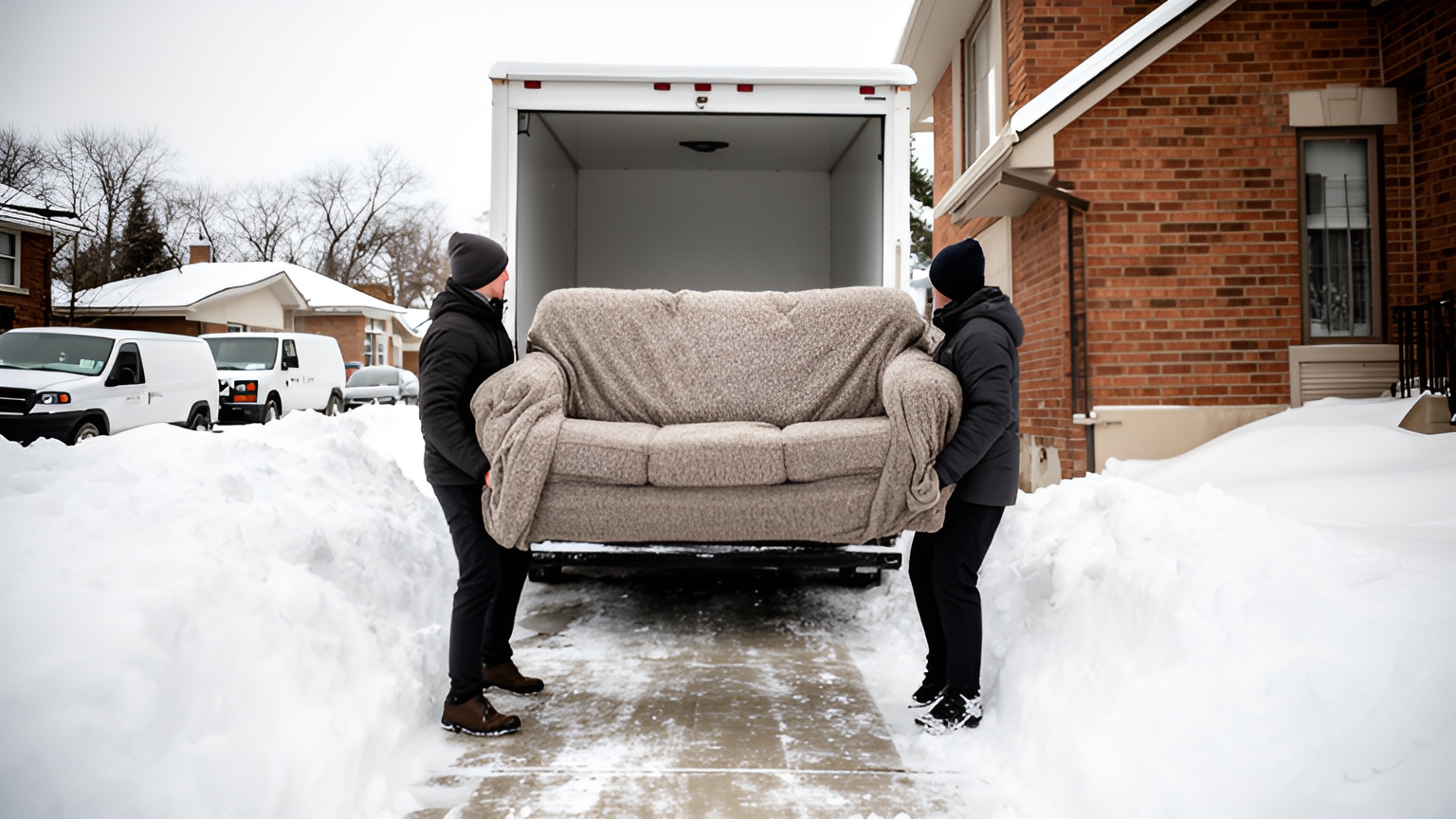
Delivery software for a furniture company plans bulky, two-person deliveries around time at the door. Booking questions capture stairs and elevators, route planning balances city and rural stops, live ETAs and day-before confirmations get customers ready, and proof of delivery records where every piece was placed. In Canada, add winter buffers built from your own stop history.
A sectional going up to a downtown Toronto condo and a dining set heading down a snowy concession road share a truck. They don't share much else.
How delivery software helps a furniture company plan time at the door, not just kilometres
Parcel routing treats the drive between stops as the main event. Furniture flips that.
For a furniture crew, the time that shapes the day is spent at the address. Carrying a sofa up a narrow staircase. Taking a door off its hinges. Assembling a bed frame. Wrapping the old mattress for haul-away.
Each of those tasks changes from one order to the next. So plan stop time from the job itself, not from a single default that treats a boxed lamp and a bedroom suite alike.
Margins leave little room for a second visit. Innovation, Science and Economic Development Canada, using Statistics Canada's Annual Retail Trade Survey data, puts the pre-tax profit margin of furniture and home furnishings stores at 6.6% in 2024.
So the planning goal is simple: give every job enough time at the door to finish on the first visit, and give every customer enough notice to be ready.
Bulky loads reward this kind of planning in any trade. Franz Building Supplies delivers heavy and bulky products to construction sites, builders and trade professionals, and its customers rely on timely, accurate deliveries to keep projects on schedule.
Its case study reports that the team wanted better visibility into its delivery operations and a reliable way to show each delivery was completed correctly.
The team put Locate2u's proof of delivery in place, capturing photo evidence, signatures and timestamps, with drivers photographing each delivery on site. It also began sharing live tracking links, so customers could see in real time when their delivery would arrive and plan around it.
For this building supplier, one bulky-goods business's result rather than a Canadian furniture benchmark, that transparency set clear expectations for customers. The team put it simply: "What I love about Locate2u is the live-tracking features and proof of delivery."
To test the same pairing on furniture, send a tracking link and photograph each placement across a week of your own deliveries, then count how many customers still needed to call for an arrival update.
How one schedule balances Toronto and Montréal condo stops with long rural runs
City stops and country stops ask different things of a schedule.
Transport Canada's 2025 annual report names chronic urban congestion, particularly in the Toronto and Montréal regions, as a restriction on first and last mile connectivity.
For a furniture schedule, that points to realistic drive times between downtown stops and a firm hand on building access.
Where a condo or apartment building requires a service elevator or loading dock booking, treat that booking as a fixed window. Capture it at checkout, then let the route be built around it rather than the other way round.
Rural customers need a different kind of care. If your showroom serves surrounding towns and farms, give those orders their own planning instead of squeezing them onto the end of a city day.
A few habits help:
Group rural orders by corridor. Offer each area a set delivery day, so one crew covers neighbouring addresses in a single loop.
Set stop duration by job type. A boxed chair and a fully assembled bedroom suite should never share a default stop time.
Plan the return leg. A rural day ends back at the warehouse, and that drive belongs in the plan too.
With accurate stop times and windows in place, Locate2u's route optimization can sequence each day's stops, whether that day is a cluster of condo towers or a long loop through farm country.
How winter buffers built from your own stop history keep delivery windows realistic
Canadian winter is long. Statistics Canada notes that almost every day is a snow day in January and February, and well into March or April, sometimes even May.
Transport Canada's winter driving guidance tells drivers to slow down, allow extra travel time and take extra care when braking, changing lanes, turning and taking curves.
The question every planner asks is how much extra. The most reliable answer comes from your own deliveries.
Compare planned and actual times. Pull last winter's stop records and set planned arrival and finish times beside the real ones, broken down by area and by month.
Split the buffer in two. Drive time stretches on icy roads. Doorstep time stretches too, with boots to manage, floors to protect and slower carries on frozen steps.
Keep buffers in place into spring. Given how late the snow can run, review in April rather than switching back the first sunny week of March.
Tighten as the data comes in. If crews in one zone finish comfortably early, trim that zone's buffer and offer customers a narrower window.
No history yet? Start with a cautious buffer and record planned against actual time on every stop from the first day. By next winter, the numbers are yours.
How booking questions and day-before confirmations get every home ready for a two-person crew
The smoothest furniture deliveries are planned at checkout. A short set of access questions tells the crew what is waiting at the door before the truck is loaded.
Questions worth adding to your booking form:
- Type of home: house, townhouse, condo or apartment
- Stairs to the room of choice, and whether they are inside or outside
- Elevator access, and any service elevator booking time
- Tight doorways, hallways or turns on the way in
- Assembly needed, or old furniture to take away
- Where the truck can park close to the entrance
Store the answers as structured fields on the order, not buried in a free-text note, so the crew sees them on their job screen and the planner can set the right stop time.
Then send a day-before confirmation. It should restate the window, the item and any assembly or haul-away booked, and invite the customer to update details if anything has changed.
In winter, add a friendly note asking for a cleared, salted path to the door. A safe walkway helps the crew carry heavy pieces with care, and most customers are glad to be reminded.
On the day, a live tracking link turns a broad window into an arrival estimate. Locate2u's real-time tracking lets customers follow the truck, so they can be home and ready when the crew arrives.
If you deliver in Québec or to French-speaking households anywhere in the country, check that confirmations and tracking messages can go out in French as well as English. Customers prepare more easily when the message reads naturally in their own language.
Finally, make rebooking easy. A clear link or number for changing the date, sent with the confirmation, helps the schedule stay accurate.
How load sequencing and haul-away stops fit neatly on the same route
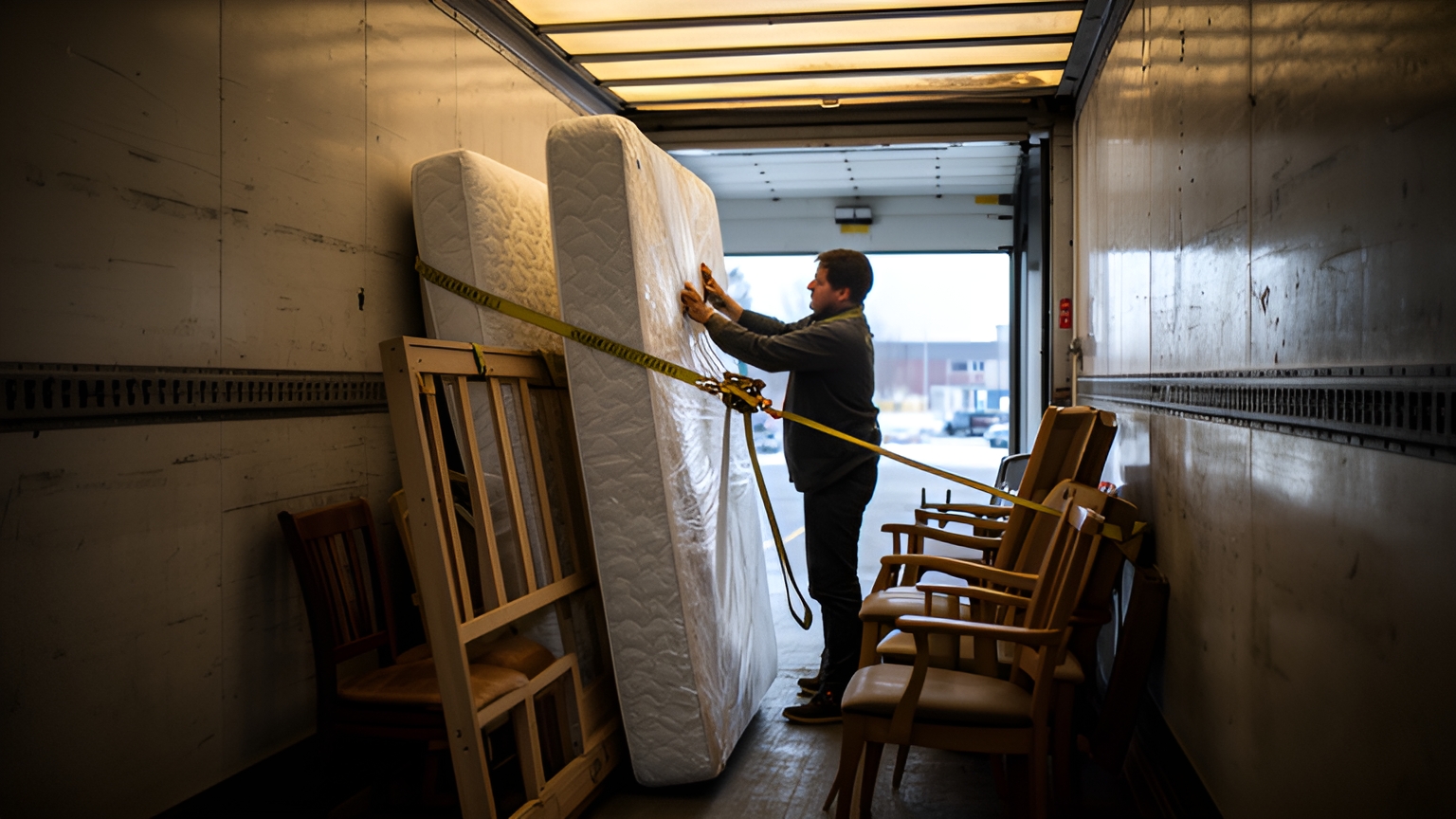
Once the route is set, the truck should be loaded in reverse order. The last stop goes in first, deep in the box. The first stop sits closest to the doors.
That simple rule saves the crew from shifting a wardrobe to reach a side table at every address.
Ask whether your software can produce a loading list in reverse route order, with each item, its stop and any special handling notes. A clear list helps the loading team and the delivery crew work from the same plan.
Loading is also the right moment for a quick condition check. A photo of each wrapped item before it goes on the truck gives everyone a clean starting record.
Haul-away needs its own planning. An old sofa or mattress takes space on the truck, so place haul-away stops after earlier drops have freed room, or confirm there is capacity before the day starts.
Treat haul-away as a task with its own time, not an add-on. The same goes for returns and exchanges, which can often share a route with new deliveries in the same area.
When every task has a time and a place on the truck, a two-person crew can follow the day as planned, with fewer surprises at each stop.
How proof of delivery gives bulky-goods teams clear records of every placement
For furniture, proof of delivery goes beyond "left at the door". It shows where the piece ended up and what the crew did there.
Locate2u's proof of delivery captures photos, signatures and timestamps for each drop. For a furniture team, a good record covers:
Placement. A photo of the item in the room of choice, assembled where assembly was booked.
Completion. The customer's signature and a timestamp once they are happy with the result.
Service notes. Whether old furniture was collected, and anything the customer asked the crew to pass on.
Those records help your customer service team answer a question in seconds.
Put them to work on condition and warranty requests. When one arrives weeks later, search the order, open your loading photo beside the placement photo, and see how the piece looked when it left the warehouse and once it was set in place.
That gives your team a clear starting point for the next step, whether it is a repair visit, a replacement part or a quick reassuring reply to the customer.
Questions to ask when testing furniture delivery software on your own routes
Feature lists read alike. The real test is a week of your own orders, ideally including a snowy week and a mix of city and rural stops.
Bring these questions to that test:
| Question to ask | What to look for on your own routes |
|---|---|
| Can stop time be set by job type? | Assembly, haul-away and stair carries each get their own time, separate from drive time. |
| Do booking answers reach the crew? | Stairs, elevator bookings, doorway notes and room of choice show on the job screen. |
| Can windows respect fixed building bookings? | A condo service elevator time stays fixed while the rest of the route flexes around it. |
| Is planned against actual time kept per stop? | Enough history, by area and month, to set and tune winter buffers. |
| How do customers hear from you? | A day-before confirmation and a live tracking link, in French and English where you serve both. |
| Can haul-away and returns share the route? | Each appears as its own task with time allowed and a note in the delivery record. |
| What does the proof of delivery show? | Placement photos, a signature and a timestamp for every job. |
Run the test with the people who will use the system every day. Crews notice whether job notes are easy to read in a gloved hand on a cold doorstep, and planners notice whether a rural day still makes sense after the route is built.
Score each question against what actually happened on your routes, not against a demo address list.
Frequently asked questions
What should an "out for delivery" message tell a furniture customer?
It should confirm the item is loaded and the crew has started the route, restate the agreed window and any assembly or haul-away, and ask for a clear walkway and entrance. Adding a live tracking link lets the customer follow the truck and be ready when the crew arrives.
How should your schedule handle a furniture delivery that could not be completed?
Record the reason on the job, such as access not being possible on the day or no one being available to receive the item, then return the order to the schedule with its booking answers kept intact. Send the customer a rebooking link straight away so the new date suits them and the crew arrives fully prepared.
Does a furniture store with one truck need delivery software?
Yes, though the value shifts from route sequencing to booking questions, customer notifications and proof of delivery, which a single crew uses on every job. The guide to delivery software for small businesses sets out a lighter starting setup.
Can online furniture orders flow straight into the delivery schedule?
Check that item, size, assembly and haul-away details arrive as order fields, that stock status stays in sync so only ready items get booked, and that your booking access questions map to structured fields on the crew's job screen. Confirm each of those against your own store and inventory systems on a call with the Locate2u team before you plan a rollout.
The quickest place to start is next week's orders: add access questions to your booking form, set stop times by job type, and record planned against actual time on every stop as the snow arrives. To see how Locate2u's dispatch planning fits your city and rural days, book a call with the Locate2u team and walk through a real week of your deliveries together.